

Production Systems
- Role: Production Lead
- Scope: 400+ SKUs across multiple brands, 4 major rebrands & 1 refresh
- Focus: Mechanicals, dielines, multi-vendor coordination & QC processes
Overview
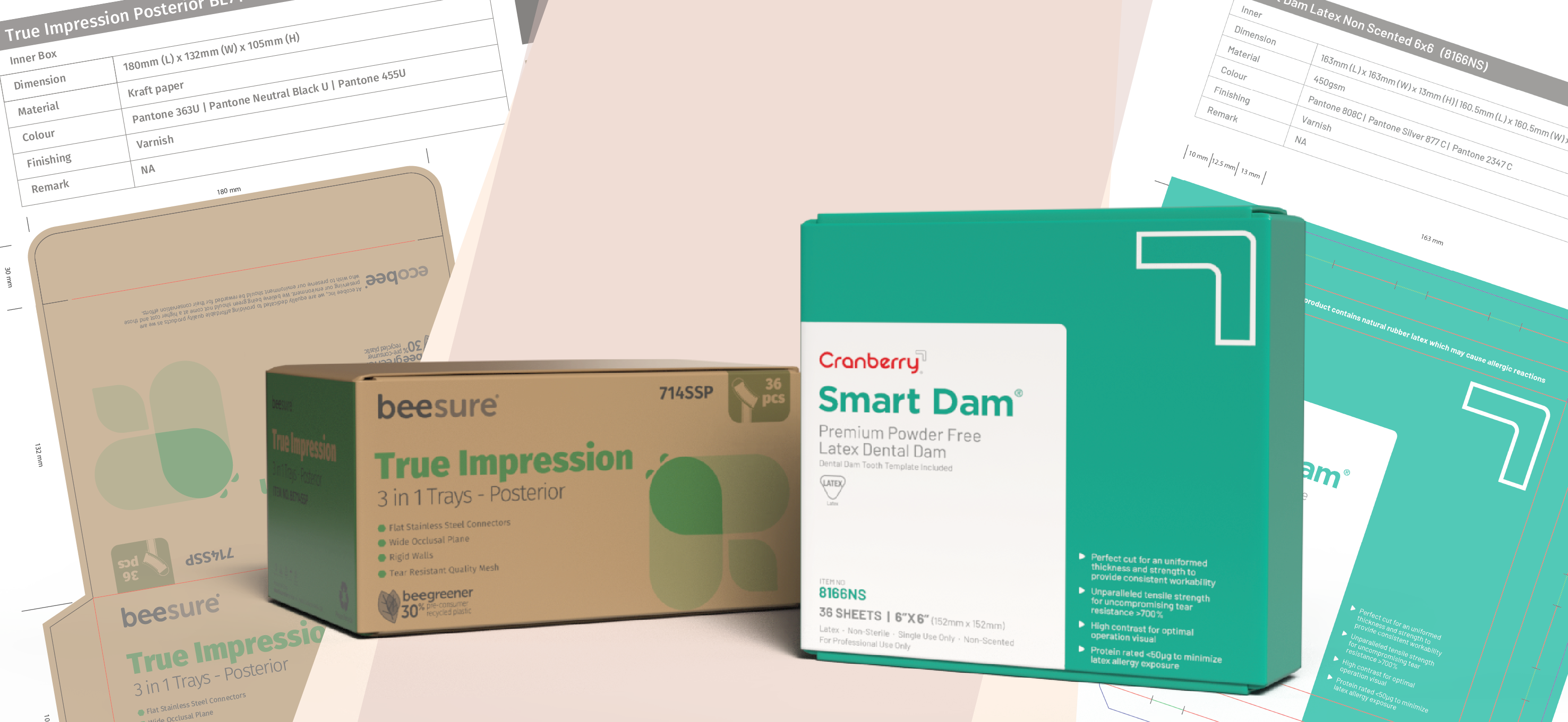
This system supported Cranberry 1.0 / 2.0, BeeSure 1.0 / 2.0, and ASAP packaging programs across 400+ SKUs. The challenge: translate design intent into precise mechanicals while maintaining consistency across complex dielines, evolving regulatory content, and high SKU volume with multiple global print vendors.
The workflow prioritized accuracy over speed, reducing error rates and reprints while supporting fast-moving launches. Each brand had distinct color standards, structural dimensions, and typographic rules that needed to remain exact across formats and print partners.
The workflow prioritized accuracy over speed, reducing error rates and reprints while supporting fast-moving launches. Each brand had distinct color standards, structural dimensions, and typographic rules that needed to remain exact across formats and print partners.
The Workflow:
Production began with structural verification: confirming dieline accuracy, fold precision, and panel dimensions before applying any artwork. This established the mechanical foundation for every SKU and ensured structural consistency across packaging families.
Production began with structural verification: confirming dieline accuracy, fold precision, and panel dimensions before applying any artwork. This established the mechanical foundation for every SKU and ensured structural consistency across packaging families.
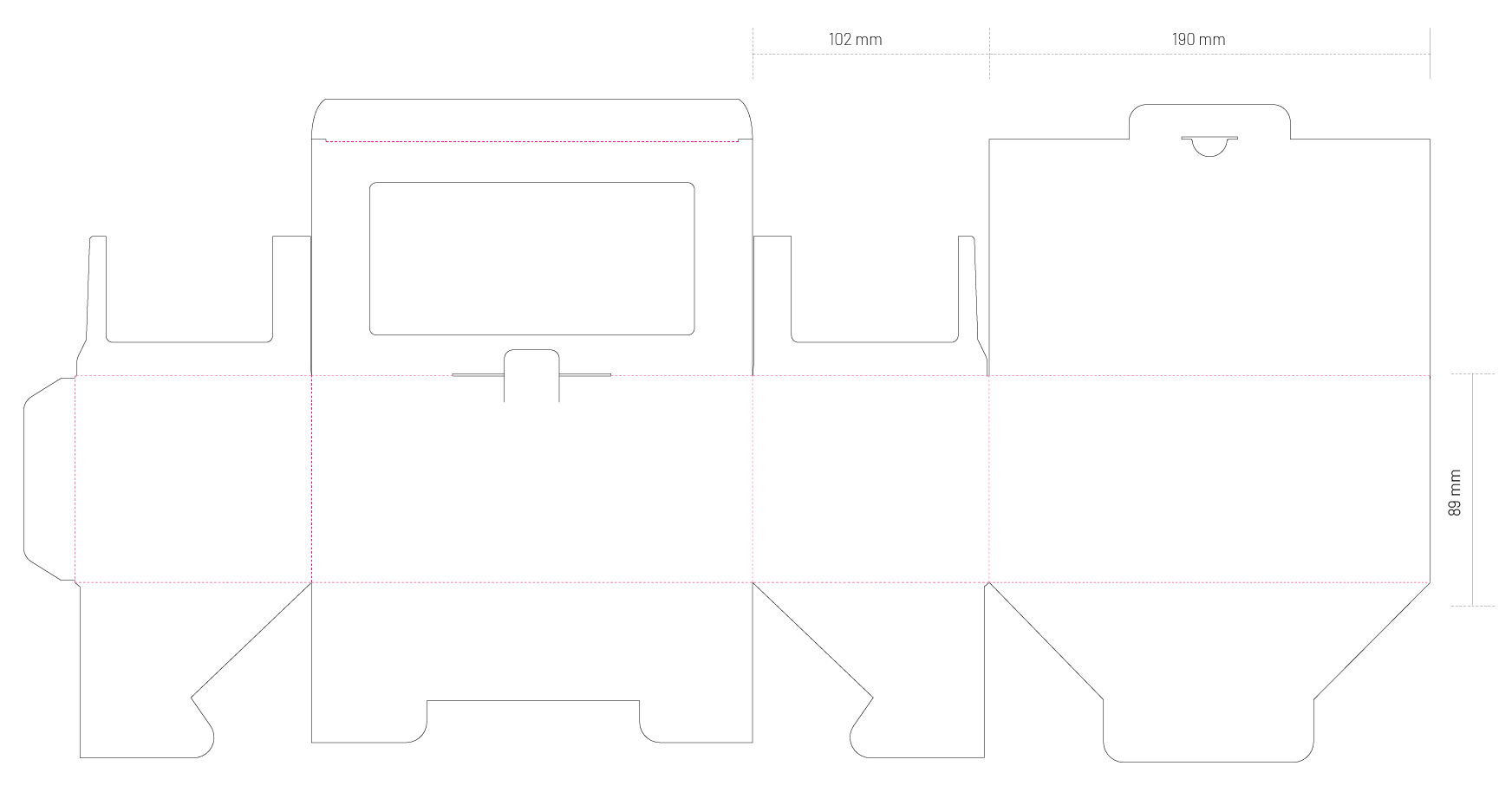
Once structural integrity was confirmed, the dieline moved into mechanical build stages. Margin guides (shown in red) and layout blocks (shown in black) were applied to establish exact placement zones for all brand elements. These guides defined where logos, typography, product information, and icons could appear, ensuring visual consistency across every SKU regardless of product line or package format.

The margin system prevented design drift and maintained brand hierarchy across 400+ SKUs. Every mechanical included complete print specifications: dimensions (102 × 190 × 88 mm), material requirements (300 gsm white based), color standards (Pantone: 2735C, Silver 877C, 2347C, Black C), finishing details (Matte Varnish), registration marks, bleed zones, and fold indicators. This documentation ensured vendors had exact placement rules and technical specs for accurate production without interpretation or clarification.
The Output:
The result: a predictable, accurate, and scalable production system that delivered over 400 SKUs, reduced reprints through structured QC, improved vendor proof accuracy, and accelerated update cycles across multiple product lines while maintaining color and compliance accuracy across print partners.
Key responsibilities:
Mechanical builds, dieline updates, multi-SKU production, QC and accuracy checks, version control, vendor proofing, compliance and labeling verification, color verification, file preparation and export.
The result: a predictable, accurate, and scalable production system that delivered over 400 SKUs, reduced reprints through structured QC, improved vendor proof accuracy, and accelerated update cycles across multiple product lines while maintaining color and compliance accuracy across print partners.
Key responsibilities:
Mechanical builds, dieline updates, multi-SKU production, QC and accuracy checks, version control, vendor proofing, compliance and labeling verification, color verification, file preparation and export.